
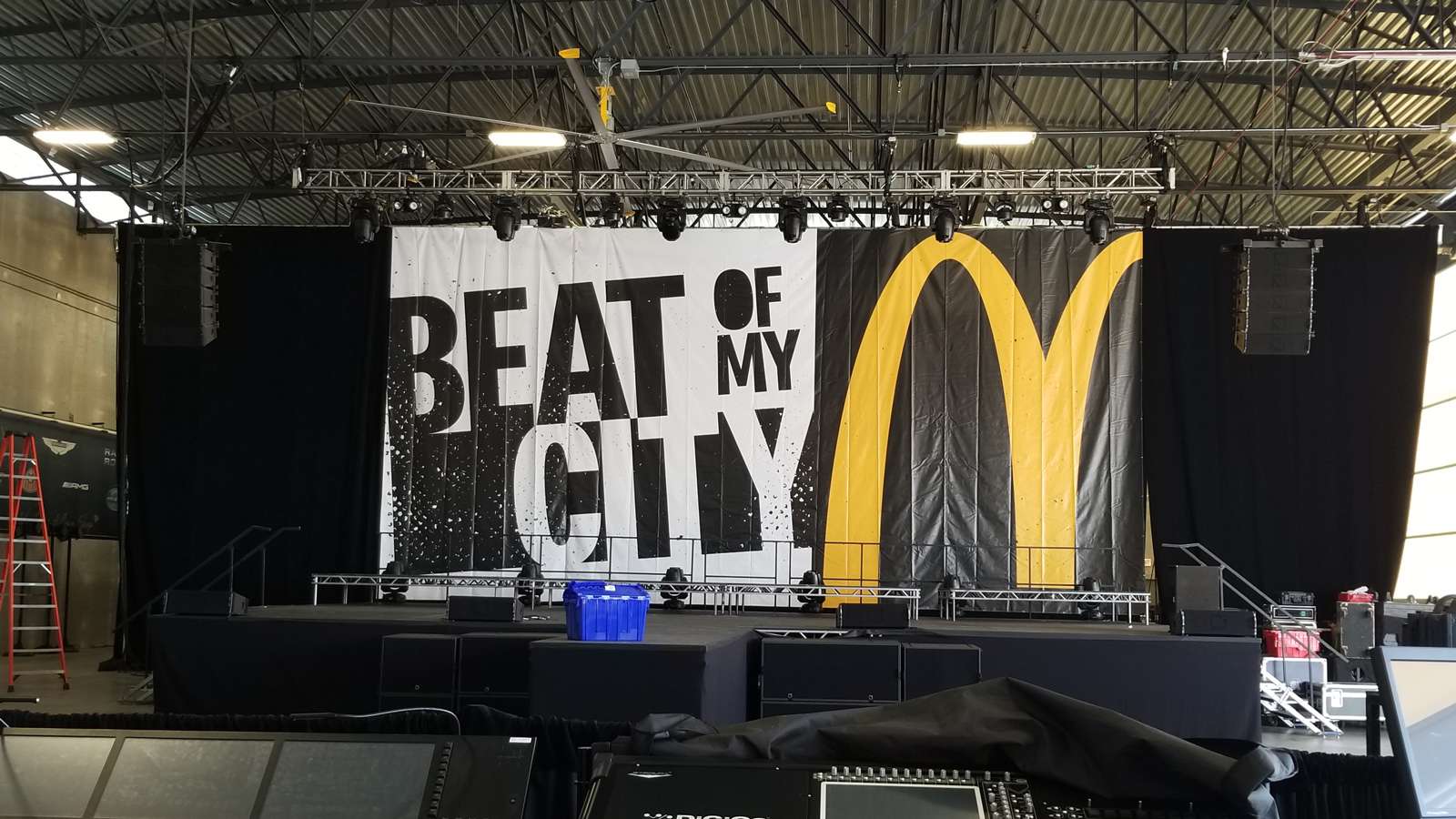
San Francisco’s weather is lovely and vicious all in one—fog sweeps in before breakfast, wind at noon, sea breeze all day. That’s the kind of combination that can bleach dye, come loose on seams, and unclamp fasteners if your banner wasn’t built to survive the Bay. Fortunately, buying and installing the correct display comes easier once you have the fundamentals sorted out. Banner Printing in San Francisco reduces to three choices: the material that can survive the climate, the size that’s appropriate for your site, and the permissions that get you in the safe zone. That’s what this 101 covers, with neighborhood regulations and on-the-ground logistics so that your banner gets seen and endures.
Materials that work in San Francisco
Vinyl for everyday outdoor durability
The vinyl is the city’s storefront workhorse, popup, street festival, and street level advertisement. It resists heavy color, wipes clean after a foggy night, and does not crack from being rolled out every day. In-town retailers like SanFranciscoBannerPrinting.com deal in top-of-the-line output in vinyl because it’s the best cost, color, and durability tradeoff that works for most commercial uses. When advertising in highly trafficked areas or simply in front of a building’s entrance, a heavy-duty vinyl face with proper-edge finishing is the simple, no-fail option.
Mesh for the wind channels near the water
If your banner is being mounted on a fence, pier railing, or roof where winds off the Bay blow, mesh is generally the choice. Small perforations allow air to pass through, reducing the “sail effect” that will pull out grommets or rip in on windy afternoons. You’ll still enjoy sharp graphics at normal viewing distances, but with much reduced stress on the hardware. Mesh is needed on much of the San Francisco outdoor installations—particularly those waterfront spots by the Port or promenades—due to this consideration.
Fabric for glare-free trade-show polish
When you’re in a ballroom or Moscone Center, lightweight polyester print fabric provides glare-free, flat-matte finish that photographs great and rolls up tidy for drayage. Pole-pocket fabric step-and-repeats and popup backdrops are also in vogue in press photos and product launches because they eliminate the hotspot glare with the LEDs and deploy in a snap with pole pockets without the stiff hardware. Pole-pocket step-and-repeat systems even dedicated to such interior applications also exist from SanFranciscoBannerPrinting.com.
Sizes and venue basics to get right
Trade-show rules change by event—start with Moscone’s policies
Each large show puts out its own exhibitor guide, but the general policies of the building are the same. Moscone needs pre-event permission for anything rigged or hung and will take down anything that does not comply with the facilities’ regulations. That means you decide on materials and weights in proportion to the building’s guidelines for rigging and develop operator sign-off in advance before you even go to press. Most shows limit sign heights permitted to hang and have anything suspended within your booth space; in earlier versions of SEMICON West, for instance, exhibitor guidelines maintained hanging-sign heights at about 20 feet. Always review your latest guide for your event after reviewing Moscone’s house policies.
Street-pole and waterfront banners follow City and Port guidelines
In order to put banners on street-light poles that are owned by the city, you will be following the Department of Public Works’ banner permit process, which deals with temporary use of such poles for citywide or neighborhood announcements. Waterfront areas are dealt with by the Port of San Francisco’s banner policy, which dictates where your pole banners can be set up and what kind of events are allowed on Port streets. These programs are civic and cultural communications only, so do not build commercial-quality campaigns, and budget lead time.
Permit basics without the headache
When a Planning permit applies—and when a temporary sign may be exempt
San Francisco Planning also controls signs on private property. The department’s signs resource web page describes that you will need a permit to install, replace, or move a sign except as exempted by conditions specifically. Their general recommendation also describes that special nature temporary signs might be exempted but shall be removed at the end of the event. Regulation details differ by zoning district, building status, and by sign type so check Planning’s up-to-date resources prior to reprinting, particularly for large wall signs, projecting signs, or in historic districts. By doing so, it’s timely to avoid reprinting or the imposition of a rush fee in the future.
City property versus private property
One area of confusion is distinguishing between private-façade banners and those installed on city-owned property like street-light poles or the waterfront. Private-property signs are approved by Planning and occasionally Building Inspection, respectively, depending on how one installs. City-pole or Port-property banners get processed through the above Public Works and Port process, but with different criteria, time limits, and restrictions on content. Make sure you know where your banner is going to be placed before you design and quote your project so you’re headed in the right direction from day one.
Finishing and hardware choices that survive the Bay
Grommets, hems, and pole pockets
From outside installation, your weak link is rarely ever the print—the edges and attachment points. Suggest reinforced hems and good-quality grommets on vinyl and mesh to distribute loads evenly as the wind passes over. Redirecting inward, pipe-and-drape or truss backdrops are cleaner and mostly needed for rigging. Specific in convention centers where outside graphics must obtain an operator’s approval to install and interior banners ride the house as much as they follow the exhibition’s display rules, obtaining the correct finish upfront avoids last-run rework at move-in.
Hardware weight and rigging approval
Because your banner will be overhead, light weight fabric backdrops save on rig loads and are simpler to manage with the unions, yet oversized vinyl faces must be split into several panels to remain under show and building weight restrictions. Moscone policy on rigging is safety first and the operator’s right to accept or refuse items that do not meet standards, so distribute specs and proofs ahead of time with your general contractor as well as the operator of the venue.
Ordering with a local printer, step by step
Begin with a concise abstract and appropriate file configuration
A simple order requires three facts—where the banner will be displayed, for how long it will have to last, and how close away the audience will be reading the banner from. Bring those facts to your printer before you have design files sent out to be exported. SanFranciscoBannerPrinting.com does standard banner size orders and has quick turnaround times; their personnel can sit down with you on whether vinyl, mesh, or fabric will be feasible with your destination and timing, and whether pole pockets or grommets will fly through your venue’s regulations. In the event that you have a step-and-repeat or interview backwall in the plans, remind them of that in advance so they can spec the appropriate fabric and finish.
Proof, produce, and plan delivery
After you’ve posted artwork and approved a proof, production will have a standard turnaround time of 2–3 days with the potential for quicker turnaround on true rushes. Coordinate delivery to your venue’s advance warehouse or the dock in case your general service contractor permits it. For fences and private façades, coordinate install time to miss high-traffic and make the proper fastener delivery for your attachment material and surface. Those little logistics decisions—the timely proofing, coordinating dock delivery, and making the right hardware install—are what keep projects on budget.
Practical sizing guidance for common San Francisco use cases
Storefront and sidewalk visibility
For the average city storefront, you want to quote copy big enough to read on the opposite side of the street and bold color that will stand on its own against stucco or brick. Vinyl banners in simple sizes are quickest to quote and to swap out seasonally. When you’re traversing a windy corner or you’ll be installing to a fence, mesh will stand up better and muffle sounds as the wind is blowing freely outside. In the extreme that your wall is historic or there are restrictions, take Planning’s accommodations into consideration before you finalize your dimensions.
Trade-show booths and press backdrops
Exhibition inline booths generally have an eight-foot top in the rear, but island booths and special pavilions may top out by permission to rigging. Pole-pocket backdrops covered with fabric are best for on-camera interviews to have even color with no reflected glare and decreased weight for the exhibition drayage and rigging teams. Since exterior graphics in Moscone require operator permission and sponsor ads are restricted outside the center, take sponsor visibility on interior articles where it’s permissible and agreed upon.
Street-pole campaigns and waterfront corridors
Neighborhood or civic programs that cover multiple blocks involve coordination with Public Works for pole banners and, in waterfront locations, Port attachment of banners. All programs are to accompany civic and cultural programs, so plan with artwork that adheres to standards of content and a timeline that will provide time to review permits, produce, and phased installments with consideration of traffic safety.
Care and lifespan in a foggy, salty city
Keep colors bright and edges tight
Mist does more than merely wet everything down – it lays down microscopically thin salt that will draw additional water. Routine washing with clean water of vinyl and mesh to wash inks out and to prevent grit from grinding in will extend your display. For fences and railings, check for tightness and replace frayed ties following windstorms. At the shop, roll fabric backdrops on tubes rather than fold to avoid wrinkles, and dry your banners bone-dry so mildew won’t take hold. Your print will endure longer, your message will be readable, and your hardware will be secure.
Conclusion
A banner that endures in San Francisco is no accident; it’s discovering material, size, and sanction to match neighborhood conditions. Vinyl for day-in-day-out exterior use, mesh where wind is a consideration, and fabric where glare-free luster is required for cameras. Examine Moscone’s policies on rigs and your show’s display demands before ink touches paper, and make the most of the City’s and Port’s programs whenever you display on public grounds. Partner with a neighborhood shop like SanFranciscoBannerPrinting.com for quick quotes, proofs, and intelligent finishing recommendations, and you’ll have a display that reads legibly, suspends safely, and gets the job in fog, wind, and salt. That’s the Banner Printing San Francisco specialty—easy decision, made early, that makes your message make the scene day after day.